Kicking off with 7 Visualization Exercises for Mental Clarity, embark on a journey to improve focus and relaxation through engaging techniques. Dive into the world of mental clarity with these visualization exercises that promise a new perspective on well-being.
In this comprehensive guide, discover the power of visualization exercises in achieving mental clarity and enhancing overall wellness. From guided imagery to nature visualization, explore a range of techniques designed to sharpen your focus and calm your mind.
Introduction to Visualization Exercises

Visualization exercises for mental clarity involve the practice of creating mental images to achieve a sense of focus, relaxation, and improved cognitive function. By vividly imagining specific scenarios, individuals can enhance their mental well-being and overall clarity.
Incorporating visualization exercises into daily routines can have numerous benefits. It can help reduce stress, increase self-awareness, boost confidence, and improve concentration. Visualization also serves as a powerful tool for goal-setting and achieving personal success.
The Importance of Mental Clarity
Mental clarity is essential for overall well-being as it allows individuals to make sound decisions, manage emotions effectively, and maintain a positive outlook on life. When the mind is clear and focused, individuals can navigate challenges with resilience and clarity, leading to a more fulfilling and balanced life.
Guided Imagery
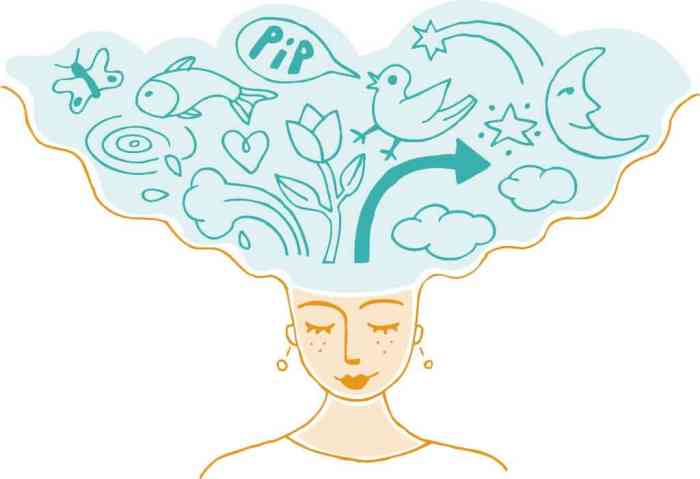
Guided imagery is a technique where a person is led through a series of mental images to achieve a specific outcome. Unlike traditional visualization where you create your own images, guided imagery involves following a script or audio recording provided by a facilitator or therapist.Guided imagery can be used in various scenarios such as stress reduction, improving focus, enhancing performance, and promoting relaxation.
It is often utilized in therapy sessions, meditation practices, sports psychology, and self-help programs.
Scenarios Suitable for Guided Imagery
- Preparing for a job interview by visualizing yourself answering questions confidently and successfully.
- Enhancing creativity by picturing yourself in a peaceful setting and letting your ideas flow freely.
- Dealing with anxiety by imagining a safe place where you feel calm and in control.
Benefits of Guided Imagery for Mental Clarity
- Guided imagery can help reduce stress and anxiety, allowing for a clearer mind and improved decision-making.
- By engaging in guided imagery, individuals can practice mindfulness and enhance their ability to focus on the present moment.
- Visualizing positive outcomes through guided imagery can boost self-confidence and motivation, leading to a clearer mindset.
Mindful Breathing Techniques

Breathing plays a crucial role in enhancing focus and mental clarity during visualization exercises. By incorporating mindful breathing techniques, you can deepen your practice and achieve a greater sense of presence.
Diaphragmatic Breathing
- Also known as belly breathing, diaphragmatic breathing involves taking deep breaths by expanding the diaphragm.
- Place one hand on your chest and the other on your abdomen. Inhale deeply through your nose, feeling your abdomen rise as you fill your lungs with air.
- Exhale slowly through your mouth, feeling your abdomen fall as you release the breath. Repeat this process several times to calm the mind and increase focus.
4-7-8 Breathing Technique
- This technique involves inhaling for a count of 4, holding your breath for a count of 7, and exhaling for a count of 8.
- Begin by exhaling completely through your mouth, then inhale quietly through your nose for a count of 4.
- Hold your breath for a count of 7, then exhale slowly and completely through your mouth for a count of 8. Repeat this cycle several times to reduce stress and enhance mental clarity.
Alternate Nostril Breathing
- This technique aims to balance the flow of energy in the body and calm the mind.
- Use your right thumb to close your right nostril and inhale deeply through your left nostril. Then, close your left nostril with your ring finger and exhale through your right nostril.
- Inhale through the right nostril, close it, and exhale through the left nostril. Repeat this pattern for a few minutes to improve focus and concentration.
Body Scan Meditation
Body scan meditation is a mindfulness practice that involves focusing on different parts of the body to increase awareness, promote relaxation, and reduce stress. This technique plays a crucial role in promoting mental clarity by helping individuals to connect with their physical sensations, release tension, and cultivate a sense of presence in the moment.
Step-by-Step Process
- Find a comfortable and quiet space to sit or lie down.
- Close your eyes and take a few deep breaths to relax.
- Start by bringing your attention to the top of your head and gradually move down through each part of your body.
- Notice any sensations, tension, or discomfort without judgment, simply acknowledging them.
- With each breath, imagine releasing any tension or stress in that particular body part.
- Continue scanning through each body part until you reach your toes.
- Take a few moments to experience the sense of relaxation and calmness throughout your body.
Benefits of Body Scan Meditation
- Calms the mind and reduces anxiety by promoting relaxation.
- Enhances focus and concentration by increasing body awareness.
- Helps in releasing physical tension and stress accumulated in the body.
- Improves overall well-being and mindfulness by fostering a deeper connection with oneself.
Vision Board Creation

A vision board is a visual tool that helps individuals clarify and concentrate on specific goals or desires. By creating a collage of images, words, and symbols that represent one’s aspirations, a vision board serves as a constant reminder of what one wants to achieve.
Tips for Designing an Effective Vision Board
- Choose a theme: Select a central theme or focus for your vision board to ensure clarity and coherence in your goals.
- Collect inspiring materials: Gather images, quotes, and symbols that resonate with your aspirations and motivate you towards your objectives.
- Organize and arrange thoughtfully: Arrange the elements on your vision board in a way that makes sense to you and reflects the importance of each goal or desire.
- Place it where you can see it daily: Display your vision board in a prominent place where you can view it regularly to keep your goals at the forefront of your mind.
Impact of Visual Representation on Goal Setting and Mental Focus
Visual representation plays a crucial role in goal setting and mental focus by harnessing the power of visualization to reinforce intentions and stimulate motivation. When we see our goals represented visually, it enhances our ability to stay focused, inspired, and committed to achieving them.
Creative Visualization

Creative visualization is a powerful technique that goes beyond traditional visualization exercises by incorporating imagination, emotion, and intention to create a vivid mental image of a desired outcome. This technique involves using all the senses to make the visualization as real and detailed as possible, thereby enhancing its effectiveness.
Differentiation from Traditional Visualization
- Creative visualization involves engaging all the senses to create a multi-dimensional experience, while traditional visualization often focuses solely on mental imagery.
- In creative visualization, the emphasis is on incorporating emotions and intention into the visualization process, making it more impactful and empowering.
- Creative visualization encourages the individual to be an active participant in shaping their desired reality, whereas traditional visualization may be more passive in nature.
Examples of Creative Visualization Techniques
- Guided Imagery: Using guided scripts or audio recordings to lead the individual through a detailed visualization of their desired outcome.
- Mental Rehearsal: Visualizing oneself successfully completing a task or achieving a goal, rehearsing the steps in detail in the mind.
- Affirmations: Combining positive affirmations with visualization to reinforce a desired belief or outcome.
Unlocking Mental Clarity and Enhancing Problem-Solving Skills, 7 Visualization Exercises for Mental Clarity
Creative visualization can help unlock mental clarity by allowing individuals to clarify their goals, visualize obstacles, and create strategies for overcoming challenges. By engaging the imagination and emotions, creative visualization can stimulate creativity and innovative thinking, leading to enhanced problem-solving skills. This technique can also reduce stress and anxiety, improve focus and concentration, and increase self-confidence and motivation.
Nature Visualization
Visualizing natural settings can be a powerful tool for enhancing mental clarity and promoting relaxation. By immersing oneself in the imagery of nature, individuals can tap into the calming and grounding effects of the natural world. This practice can help reduce stress, increase focus, and foster a sense of well-being.
Process of Nature Visualization
- Find a quiet and comfortable space where you can relax without distractions.
- Closing your eyes, imagine yourself in a serene natural environment such as a forest, beach, or mountainside.
- Engage your senses by visualizing the sights, sounds, smells, and sensations of being in that place.
- Take deep breaths and let yourself fully immerse in the experience of being surrounded by nature.
- Stay in this visualization for a few minutes, allowing yourself to feel a sense of peace and tranquility.
Psychological Benefits of Nature Visualization
- Reduces stress and anxiety levels by promoting relaxation and calmness.
- Improves focus and concentration by providing a mental escape from everyday worries.
- Enhances mood and overall well-being by connecting with the beauty and tranquility of nature.
- Boosts creativity and inspiration by stimulating the imagination through natural imagery.
Outcome Summary: 7 Visualization Exercises For Mental Clarity
In conclusion, mastering the art of visualization exercises can lead to improved mental clarity, enhanced focus, and a deeper sense of well-being. By incorporating these techniques into your daily routine, you can cultivate a more balanced and centered mindset. Start your journey towards mental clarity today with these 7 visualization exercises.